Posted on Leave a comment

How I’m Using AI to Save Time Without Losing the Human Touch

AI to save time

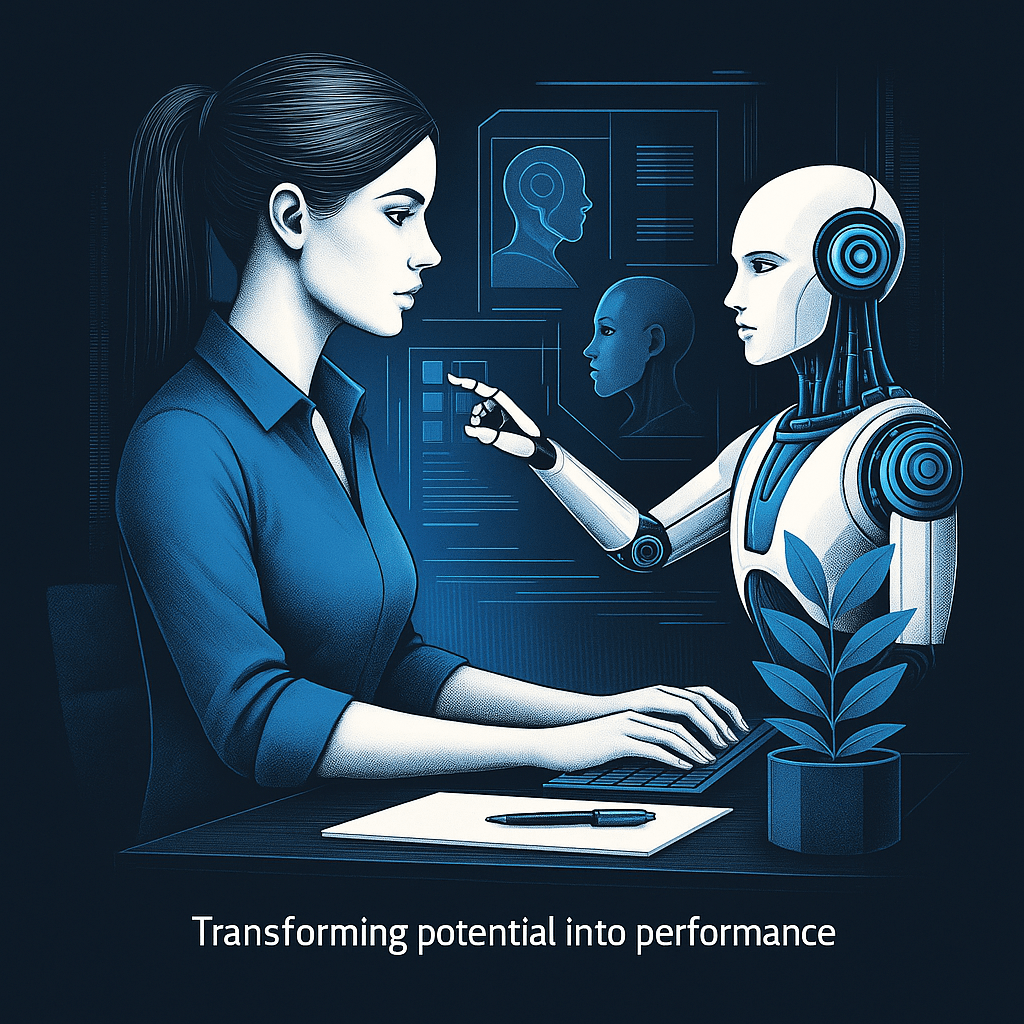
Like a lot of people, I wasn’t sure at first where AI would actually fit into my day-to-day work. I didn’t want to rely on it, I didn’t want to sound robotic and I definitely didn’t want anything I published to feel generic or templated.

But over time, I’ve found a handful of ways AI can help me work faster without losing the human side of what I do.

This post isn’t about hacks or automation tools, it’s about how I’m using AI to save time and focus more on what actually matters. The work that moves the needle.

I use AI to create structure, not polish

Some days, getting started is the hardest part. So I use AI to help me structure early ideas, especially when I’m juggling client work, content and prepping for a course launch.

  • I might jot down some rough thoughts, then ask ChatGPT to group them into a clearer outline
  • I sometimes draft a short blog paragraph and ask for a couple of alternative angles or tone shifts
  • If I’m working on course slides, I might get a rough script blocked out that I can then rework and personalise

I don’t expect it to be perfect. I expect it to be helpful.

I use it to cut through noise, not replace judgement

I also use AI to summarise things quickly when I’m short on time. Things like meeting notes, long emails and even call transcripts. It gives me a starting point, but I always review the context myself. It’s still my brain making the final call.

This has saved hours in my week, especially when switching between projects or trying to keep things moving without missing key details.

Where I draw the line at using AI to save time

I don’t use AI to write anything final. I don’t use it to speak for me. And I don’t use it to remove the parts of my work that need real connection.

Every blog post, every course module, every client email still goes through me. My tone. My edits. My judgement.

Because that’s the part people connect with and that’s not something I’m willing to outsource.

Strategic Thinking Still Matters Most

What AI has done is help me make better use of my time, but that only works when I use it intentionally.

I still need to decide what to say yes to. What to prioritise. And what direction I’m heading in.

That’s where strategic thinking matters most and it’s what I teach in my work. AI might help you move faster, but strategy helps you move in the right direction.

Want to use AI without losing your voice?

My upcoming course, How to Employ Strategic Thinking, helps you cut through noise, reduce reactivity and make better decisions whether you’re leading a team or building a business.

Join the waitlist or get in touch before launch day.

Transforming Potential into Performance

Posted on Leave a comment

The Simple Framework I Use to Think More Strategically

think more strategically

There was a time when I thought I was being strategic… But in reality, I was just solving tactical problems on a slightly longer timeline. I’d block out time to plan, only to fill it with to-do lists. I’d think ahead, but only as far as next quarter. I was stuck in forward motion, not forward thinking. I needed to think more strategically.

What helped shift things? A simple mindset framework I still use to this day, something I now help others put into practice as well. I call it:

Step back. Zoom in. Move forward.

Step 1: Step Back

Before you can think more strategically, you need space to be able to think period. That means disconnecting from urgency. Shutting down your inbox. Giving your brain a moment to look at the full picture.

When I step back, I ask myself:

  • What’s changed since I last looked at this plan or problem?
  • Are we still heading toward the right goal or just executing because it’s on the calendar?
  • Where might we be chasing effort instead of impact?

This doesn’t take hours, it just takes intention.

Step 2: Zoom In

Once I’ve reset the lens, I zoom in on the one area that matters most right now. This is where I try to spot the leverage point. The one decision, issue or opportunity that will make the biggest difference if handled well.

Strategic thinking isn’t about fixing everything. It’s about finding the right thing to focus on next. Sometimes that means prioritising a long-term initiative over an immediate win. Sometimes it means saying no to something that doesn’t move the dial.

It’s not always comfortable, but it always brings clarity.

Step 3: Move Forward

Finally, I move forward. But now with intention, not just momentum.

This part is key. It’s easy to fall back into reacting, especially when things get messy. But if you’ve stepped back and zoomed in first, you’re better positioned to make a confident, aligned decision.

And you avoid the trap of solving surface problems when the real issue lives deeper.

Why This Framework Works

It’s not complicated and that’s exactly why it works. I’ve used it to:

  • Decide which client opportunities to say yes (or no) to
  • Prioritise what content or messaging will matter most
  • Shift from firefighting mode back into strategic clarity

This isn’t something that lives in a slide deck, it lives in how I think, plan and act every week.

Want to Build a Think More Strategically Habit That Sticks?

This framework reflects the kind of mindset shift we build throughout my upcoming course:

How to Employ Strategic Thinking (A practical course for business owners, team leads and emerging leaders who want to make better decisions, faster.)

If you’re ready to stop reacting and start leading with intention, this course was made for you.

Join the waitlist or get in touch to learn more before it goes live in July.

Transforming Potential into Performance
Posted on Leave a comment

You’re Already Using AI. But Are You Using AI Strategically?

using AI strategically

From writing support replies to summarising customer conversations, AI is already part of how many businesses operate. But here’s the real question: If your business is using AI, are you using AI strategically or just letting the tools guide the way without intention?

It’s a distinction that matters more than ever.

Using AI Strategically Starts With 3 Simple Questions

For most growing businesses, AI has crept in slowly. Maybe it started with chat suggestions, a chatbot pilot or a few automations. Over time, it became just part of the workflow. But without strategy, these tools can cause more confusion than clarity.

Here are three simple questions that smart leaders ask to make sure they’re using AI strategically, not just reactively:

  1. What customer problems are we trying to solve? Too many teams plug in tools to chase efficiency but forget to ask whether they’re actually helping customers. AI should support the experience, not replace it.
  2. Where does AI genuinely reduce effort for the customer or the team? Good use of AI should feel almost invisible. If your team is still doing heavy lifting around the tech (e.g. fixing bad handoffs, rewriting replies or untangling workflows), something’s off.
  3. Do we know what success looks like? If you don’t have clear goals, whether that’s faster resolution, fewer escalations or better consistency. It’s hard to know if the tech is working for you or if you’re working for it…

The Risks of Accidental AI Adoption

When businesses adopt AI without intention, they often fall into one of two traps:

  • Over-automation: Where bots replace too many human touchpoints and customer trust starts to erode.
  • Under-implementation: Where tools are bolted on without a clear process and the result is more work, not less.

A recent report by PwC* found that while 73% of business leaders use AI in some form, only 28% say they have a strategy in place for how they use it.

That’s a big gap and a big opportunity.

Using AI Strategically Means Starting With People, Not Tools

At its best, AI enhances the value your people bring. It frees up time for judgment, empathy, problem-solving and personalisation. The very things that bots can’t replicate.

But that only happens when it’s used with purpose. So before chasing that next shiny AI feature, take a step back. Map your customer journey. Involve your team. Define what good looks like and then choose tools that support that vision.

Because the businesses that win with AI, aren’t the ones using the most of it. They’re the ones using AI strategically.

Want to Get Smarter About Using AI Strategically?

We help growing businesses design smart, human-first support strategies and that includes putting AI in the right places, for the right reasons.

Whether you’re just starting to explore AI tools or are looking to make sense of the ones you already use, we can help you clarify what to automate, what to humanise and how to scale without losing quality.

Book a free 30-minute Scale-Up Strategy Check-In

Let’s explore how your business can make AI work for your customers and your team, not the other way around.

Transforming Potential into Performance
*Source

PwC 2023 AI Business Survey73% of business leaders use AI in some form, but only 28% say they have a strategy in place.

Posted on Leave a comment

Proactive Leadership: Moving From Firefighting to Forecasting

proactive leadership

Too many leaders spend their days reacting putting out fires, chasing updates, and solving problems that feel urgent but rarely move the needle. If that sounds familiar, you’re not alone. But here’s the thing: great leadership isn’t about handling chaos well. It’s about building a team and structure that stops the chaos from happening in the first place. This is the heart of proactive leadership and it’s the difference between surviving and scaling.

What Reactive Leadership Looks Like

We’ve all worked in environments where it feels like everything is urgent. Projects stall. Priorities shift daily. Meetings turn into crisis management sessions. If you’re:

  • Constantly pulled into last-minute issues
  • Struggling to find time for forward planning
  • Noticing your team is burning out or unclear on priorities

…you’re probably stuck in a reactive leadership loop. This doesn’t mean you’re doing a bad job, it just means the system you’re working in isn’t designed to give you breathing space. And without space, strategic thinking has no room to thrive.

The Case for Proactive Leadership

Proactive leadership is about shaping the future rather than reacting to the present. It means leading with intention, designing better systems and giving your team clarity on where they’re headed and why. It looks like:

  • Setting clear priorities (and sticking to them)
  • Creating processes that solve problems before they escalate
  • Coaching your team to take ownership and solve challenges at the right level
  • Building time for reflection, learning and big-picture thinking

When you make the shift from reactive to proactive, you unlock better decisions, better morale and more sustainable growth.

Why It’s Hard to Break the Cycle

The honest truth? Firefighting feels productive. It keeps us busy, involved and (sometimes) important. But it rarely builds anything lasting.

What makes it even harder is that many leaders are promoted for being great problem-solvers, not great forecasters. It takes a conscious effort to rewire how you spend your time and what you reward in others.

If you’ve ever received feedback that you need to be “more strategic,” you’re not alone. I’ve been there. I used to spend 80% of my time on tactics and only 20% on strategy. I was constantly being told I needed to flip it, but no one showed me how. So I figured it out.

A Better Way Forward

Here are 3 steps to start shifting from firefighting to forecasting:

  1. Audit your time. For one week, track where your energy goes. How much time is spent on solving vs shaping? You might be surprised.
  2. Block strategic time and protect it. Treat thinking time like any other meeting. Make space for it, or it won’t happen.
  3. Coach your team to escalate smarter. Not every problem needs your input. Build a culture of ownership and decision-making so your team can move forward without waiting on you.

Ready to Step Into Proactive Leadership?

If you’re stuck in the cycle of constant reaction and want to lead with more clarity and impact, that’s exactly what we help with.

From shaping strategy to building scalable structures, our consultancy is here to help you lead smarter, not just harder.

Transforming Potential into Performance
Book your free Scale-Up Strategy Check-In here

Posted on Leave a comment

Thinking Time Is a Leadership Tool, Not a Luxury

thinking time

“I just need to get through this week.” That’s what a founder told me, for the third week in a row. Her calendar was rammed. Every hour was blocked off with back-to-back calls, team stand-ups, project reviews and investor updates. It’s a common trap as thinking time often gets treated as a reward. It’s something we’ll do once the ‘real’ work is done.

But here’s the truth: Thinking time is the work.

The Hidden Cost of Skipping Thinking Time

When leaders don’t carve out space to think, the business pays the price:

  • Strategy becomes reactive, not proactive.
  • Teams start misfiring from lack of clarity.
  • Everything feels urgent and burnout creeps in fast.

If your calendar is full but your vision is foggy, something has to give.

A study by McKinsey* found that only 9% of executives feel they devote enough time to strategic work. Yet those who do are more than twice as likely to outperform their peers.

Why Thinking Time for Leaders is Critical

This isn’t about idling on a beach with a notepad. It’s about making room for better decision-making, deeper focus and clearer communication. Some of the most transformative ideas I’ve seen came from just one protected hour on a founder’s calendar.

Not because they crammed more in. But because they finally gave themselves the chance to think.

3 Techniques to Build Space Into Your Week

1. Block time in your calendar and treat it as sacred.

No meetings. No inbox. Just focused thinking time ideally at your mental peak, not squeezed between tasks.

2. Use 90-minute strategy sprints.

Pick one issue and go deep. Sketch ideas. Reframe problems. Ask yourself: What’s the real decision that i need to make here? Bonus tip: do this somewhere away from your usual desk to reduce distractions.

3. Run a weekly review.

Ask: What moved us forward this week? What felt like noise? What needs to change next? Documenting this helps you spot patterns and course-correct early.

The Bottom Line

Thinking time for leaders isn’t indulgent. It’s essential.

If you’re stuck in delivery mode and struggling to zoom out, I can help.

🧭 Book a free Scale-Up Strategy Check-In. A 30-minute call to refocus, realign and get your head above water.

Transforming Potential into Performance
*Sources

McKinsey & Company, “The State of Organizations 2023

Posted on Leave a comment

Why AI in Business Is Really About Reclaiming Time

AI in business

When most people think of AI in business, they picture robots, automation and futuristic systems replacing human workers. It’s a common misconception and one that’s often fuelled by hype-driven headlines or flashy product demos. But in practice, that’s not where the real value of AI lies for most businesses.

The real advantage of AI isn’t about replacing people. It’s about reclaiming time, reducing friction and freeing up energy to focus on the work that actually moves the business forward. In an age of growing demands and shrinking attention, AI offers something many teams desperately need: breathing space.

From Automation to Amplification

Despite how it’s often marketed, AI in business is not about eliminating jobs or dehumanising operations. It’s about reducing the repetitive and reactive work that eats away at productivity and morale.

Think about how much time is lost every week drafting the same kinds of emails, writing first-pass reports, summarising meetings or pulling together fragmented notes. According to a recent study by Asana*, the average knowledge worker spends 58% of their time on “work about work.” Switching between apps, chasing updates, duplicating tasks and generally treading water to stay afloat.

That’s where AI can make a meaningful difference.

By handling lower-value, repeatable tasks like summarising conversations, drafting content, tagging support tickets or automating parts of internal workflows. AI doesn’t eliminate human input, it amplifies it. Your team gets time back to think more clearly, execute more deliberately and focus on higher-impact work.

It’s Not Just About Efficiency, It’s About Headspace

Time savings aren’t just a matter of hours gained. They’re also about reducing mental load.

One of the biggest challenges for founders, team leads and scale-up operators is context switching. You move from a budget meeting to a customer issue, then to a hiring conversation and then onto a product roadmap review often in the same hour. Each one demands different focus, tone and mental energy.

When used well, AI in business reduces the constant grind of decision fatigue. It helps teams prioritise better, catch issues earlier and avoid the burnout that comes from trying to hold everything in your head at once. The time you reclaim isn’t just for doing more, it’s for thinking better.

Where AI in Business Is Already Reclaiming Time and Focus

Across industries, AI is already being used to support smart business practices. Not by replacing humans, but by supporting them. Some practical examples include:

  • Customer support: AI triages tickets, suggests responses and escalates more effectively, allowing human agents to focus on complex, high-empathy conversations.
  • Marketing & communications: Teams use AI to generate content drafts, perform research and repurpose existing assets, reducing creation time and unlocking capacity.
  • Operations & admin: Meeting summaries, task follow-ups and resource management are increasingly supported by tools that streamline routine processes.
  • Data insights: AI analyses customer feedback, sales data or usage patterns to surface trends and support better, faster decision-making.

These are not theoretical gains, they’re happening right now. In fact, a McKinsey report* found that businesses using AI tools effectively are seeing productivity increases of up to 40% in targeted functions, especially where repetitive tasks are high.

Use AI as a Lever, Not a Crutch

Of course, AI isn’t a silver bullet. It won’t fix broken processes or create vision where none exists. But when used intentionally as part of a broader strategy, it can become a powerful lever for change.

The key is to treat it as a supporting tool, not a substitute for good leadership, sound thinking or clear direction. Businesses that lead with strategy and then apply AI to help scale their efforts are the ones that benefit most. Those that jump on the tech without clarity often end up creating more chaos, not less.

The Bottom Line

AI in business isn’t about science fiction. It’s about freeing up space to do better work.

It’s about allowing your team to shift from busywork to meaningful impact. To stop spinning their wheels and start moving with purpose.

If you’re exploring where AI could add value in your business, don’t start by asking what tools you need. Start by asking: What would we do better if we had more time and focus?

AI might just help you reclaim both.

Want to Explore AI in Business Without the Overwhelm?

If you’re curious about how AI in business could reduce friction and give your team more room to breathe without the hype or overengineering, I’d be happy to help.

Reach out here for an informal conversation about where to begin

→ And stay tuned, I’ll be sharing more guidance on this over the coming months

*Sources

Posted on Leave a comment

You Don’t Need to Be a Fortune Teller to Think Strategically

think strategically

A lot of people assume that to think strategically, you need to be able to see the future. Where the market is going. What your competitors are planning. What your team will need in six months. But this is all a myth…

Strategic thinking isn’t about prediction, it’s about preparation. It’s about thinking clearly when others are scrambling. It’s about positioning yourself to respond with intent, not react out of panic.

What Strategic Thinking Isn’t

To think strategically, you don’t need a grand vision, a Gantt chart or a degree in economics. Strategic thinking is not about:

  • Having all the answers up front
  • Creating rigid long-term plans you never revisit
  • Reacting faster than the competition

In fact, one of the biggest blockers to strategic thinking is the pressure to “get it right.” Strategic thinkers know it’s not about certainty, it’s about clarity.

What It Actually Means to Think Strategically

Strategic thinking is about how you think, not what you predict. It means:

  • Asking better questions
  • Looking for patterns others miss
  • Creating simple frameworks that help guide decisions
  • Zooming out from the daily noise
  • Keeping one eye on what matters long-term

Strategic thinkers aren’t trying to control the future. They’re building the capacity to adapt to it with purpose.

Why This Mindset Wins in the Long Run

Teams and leaders who think strategically:

  • Respond more confidently in moments of change
  • Avoid burnout from constant fire-fighting
  • Make decisions that hold up over time
  • Know when to shift course and when to stay the path

They don’t move faster by chance. They move smarter because they’ve made space to think!

How to Build Your Own Strategic Thinking Habits

You don’t need more time. You need a few new habits that help you slow down just enough to see the bigger picture. Here’s where to start:

  • Make space, don’t wait for it: Block time weekly to zoom out
  • Ask questions before making decisions: Especially “what’s the second-order effect?”
  • Reflect regularly: What worked, what didn’t and why?
  • Think across time horizons: Today, this quarter, this year

Strategic thinking isn’t a talent, it’s a practice. You get better by doing it.

You’re Already Closer Than You Think

You don’t need to be a strategist by job title or a futurist by nature.

If you’ve ever paused to zoom out, questioned the default or looked for a better way. You already know how to think strategically.

So now it’s time to build on it.

Want to Help Your Team Think More Strategically?

If you’re ready to shift from tactical reactivity to thoughtful strategy:

Reach out here to see how we can support you

→ Or keep an eye out for our upcoming course How to Employ Strategic Thinking which is launching soon

Posted on Leave a comment

The Real Reason Strategic Thinking Gets Overlooked

strategic thinking

We all say that strategic thinking is important. But when the pressure’s on, it’s often the first thing that gets dropped.

There’s always something urgent to fix, another task to tick off, a deadline looming, so we stay tactical. Not because we don’t care about strategy, but because the day-to-day leaves little room for anything else.

I know this all too well. Years ago, I was told I was spending 80% of my time on tactical items and only 20% on strategic ones. I was advised I needed to flip that ratio!

The message was clear: “You need to think more strategically.”

But no one told me how. That moment stuck with me and it’s one of the reasons I care so much about helping others unlock this mindset.

The Myth of “No Time” for Strategic Thinking

You’ll often hear people say: “We just don’t have the headspace for strategy right now.”

But it’s rarely about time. What’s really missing is structure and sometimes, permission. Strategic thinking isn’t something you “find time for” once everything else is done. It’s something you build into the way you work deliberately and consistently.

Why Strategic Thinking Gets Derailed

We all know strategy matters. But it’s often misunderstood or mis-prioritised for a few key reasons:

  • We reward action over reflection
  • We confuse urgency with importance
  • We treat strategy as something for the “quiet weeks” even though it’s what creates the space for sustainable growth

And sometimes?

We just don’t feel confident doing it. Strategic thinking feels vague. Abstract. Or too “big” for the role we’re in.

What Strategic Thinking Actually Looks Like

The truth is, strategic thinking isn’t always about five-year visions or detailed frameworks. It’s often much more subtle and more practical than we give it credit for. Real strategic thinking looks like:

  • Setting direction, not just solving the problem in front of you
  • Taking time to zoom out especially in fast-moving environments
  • Prioritising decisions that align with long-term goals, not short-term wins
  • Spotting patterns, asking better questions and making space for thought before action

It’s not about being perfect. It’s about being intentional.

The Bottom Line

Strategic thinking gets overlooked not because it’s unimportant but because it’s invisible. It doesn’t ping your inbox. It doesn’t send reminders.

But without it, businesses drift, teams burn out and decisions become reactive instead of proactive.

And in today’s fast-moving landscape, that’s a risk no one can afford.

Want to Build Strategic Thinking Into Your Week Not Just Your Wishlist?

If you know strategy matters but you’re not sure how to actually bring it into your day-to-day, I can help.

Get in touch here to explore how we can help develop this mindset in your business

→ Keep an eye out for my upcoming course: How to Employ Strategic Thinking which is launching soon

Posted on Leave a comment

The Role of AI in Customer Support: Benefits and Limitations

AI in customer support

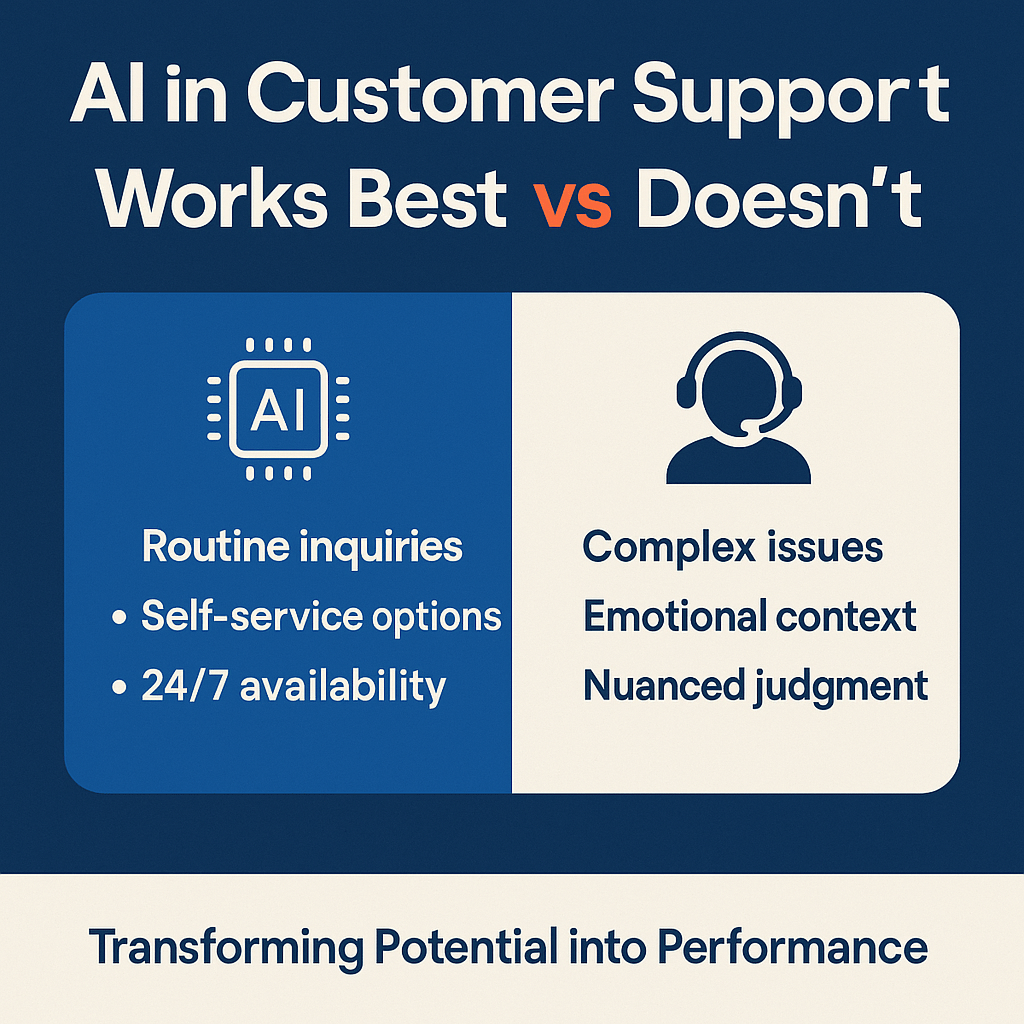
There’s a lot of hype around AI in customer support right now. Chatbots, automations, suggested responses and self-service portals are all promising faster service, happier customers and leaner teams. However, just because AI can do something, doesn’t mean it should…

The real skill isn’t deciding whether to use AI. It’s knowing where it works best and where it doesn’t.

Where AI in Customer Support Adds Real Value

When used with purpose, AI is a powerful asset. It can reduce pressure on teams, speed up simple tasks and improve consistency across channels.

Here’s where smart businesses are seeing genuine benefits:

  • Triage and routing: Quickly identifying the right person or place for each query, reducing wait times and frustration.
  • Handling repetitive, high-volume queries: Think order tracking, password resets or basic account updates. These don’t need human effort, just clear, reliable answers.
  • Summarising conversations for agents: Giving agents fast access to a conversation’s history or suggesting next steps, so they can spend less time scrolling and more time solving.
  • Flagging issues and spotting trends early: AI can help identify repeat issues, customer sentiment shifts or emerging patterns before they escalate.

Used well, AI helps support teams focus on the work that matters most.

But not every part of the journey is a good fit.

Where AI Falls Short (and People Still Matter Most)

There are moments in customer support where no bot, no automation and no AI can deliver what’s needed. There are a whole host of key areas where a human connection is still needed:

  • Complex emotional issues: A bot can apologise but it can’t really empathise.
  • Conflict resolution and escalations: Sometimes what a customer needs isn’t a faster response. It’s a calm, capable person who can listen, explain and own the problem.
  • Situations that need judgment or nuance: Not every customer request fits neatly into a flowchart. Knowing when to flex the rules or offer an exception requires context, not code.
  • Long-standing relationships and key accounts: High-value customers expect more than a scripted service. They want to feel understood, not processed.

The risk isn’t just that AI can’t handle these situations well. It’s that bad automation in these moments damages trust faster than it saves time.

The Problem with AI Overconfidence

When businesses lean too hard on automation without clear purpose or good design, the cracks start to show:

  • Poor handoffs from bot to human
  • Customers repeating themselves again and again
  • Frustration bubbling into escalations that could have been avoided
  • Agents left cleaning up the mess

In the rush to automate, too many teams forget that AI is a tool, not a strategy.

Smarter Customer Support Starts with Strategy, Not Tools

The smartest support leaders aren’t asking, “Where can we use more AI?”

They’re asking, “Where does AI genuinely help and where do we need to show up as humans?”

It’s not about plugging in tools as a quick fix. It’s about starting with the customer journey design first and then fitting the right tech to the right parts of the process.

When you lead with strategy, AI becomes an asset.

When you lead with hype, it becomes a headache.

Want to Use AI to Strengthen Your Support Not Weaken It?

We help growing businesses design smarter support strategies. Balancing smart automation with human-first service design.

If you’re ready to make AI work for your business (and not the other way around):

Get in touch here to explore how we can help.

Posted on Leave a comment

Personalised Customer Support: More Than First Names

personalised customer support


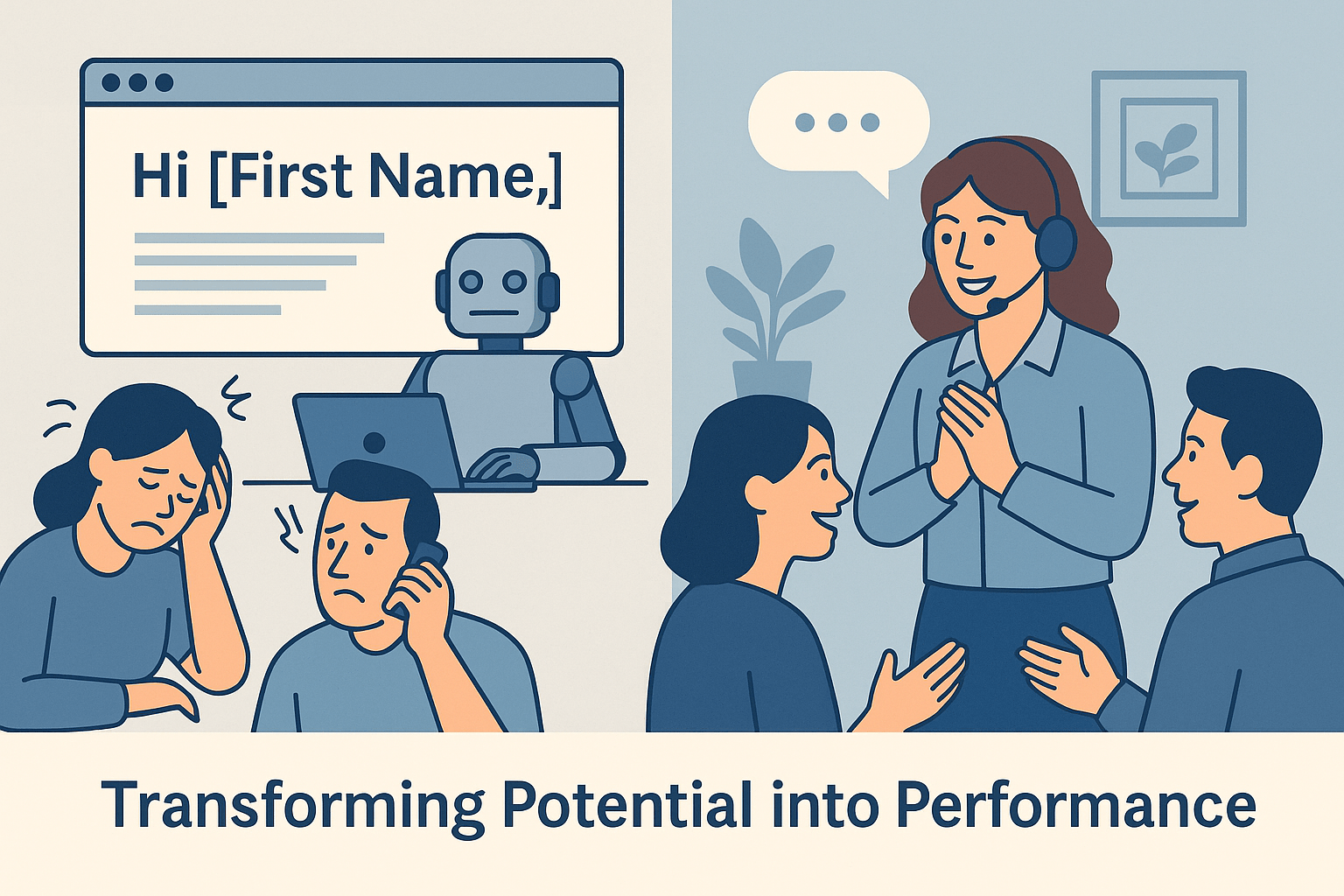
In today’s digital landscape, personalised customer support has become more than just a buzzword. It’s a critical component of customer satisfaction and loyalty. While addressing customers by their first names in emails is a start, true personalisation delves deeper, aiming to understand and meet individual customer needs effectively.

The Real Meaning of Personalised Customer Support

Personalisation in customer support is about delivering relevant, timely and context-aware interactions that make customers feel valued. It’s not merely about using customer data but about using it wisely to enhance the customer experience.

Key aspects include:

  • Understanding Customer History: Recognising previous interactions to provide consistent and informed support.
  • Anticipating Needs: Using data to predict and address customer issues before they arise.
  • Tailoring Communication: Adapting the tone, channel and content of communication to suit individual preferences.

Why Personalisation Matters

The importance of personalised customer support is underscored by these compelling statistics:

  • 71% of customers expect personalised experiences, with 76% expressing frustration when they don’t receive them.
  • 80% of buyers are more likely to purchase when brands offer personalised customer experiences.
  • 63% of consumers expect customer support agents to know their unique needs and expectations.

These figures highlight that customers not only appreciate but expect personalisation. Failing to deliver can lead to dissatisfaction and loss of business.

Challenges in Scaling Personalised Customer Support

While the benefits are clear, scaling personalised customer support presents some challenges:

  • Data Management: Consolidating customer data across platforms to create a unified view.
  • Technology Integration: Implementing tools that enable personalisation without overcomplicating processes.
  • Maintaining Human Touch: Ensuring that automation doesn’t replace the empathy and understanding that human agents provide.

Strategies for Effective Personalisation at Scale

To overcome these challenges, businesses can adopt the following strategies:

  1. Invest in Unified Customer Data Platforms: Tools that aggregate data from various sources to provide a comprehensive customer profile.
  2. Leverage AI and Machine Learning: These technologies can analyse customer behaviour to offer personalised recommendations and predict future needs.
  3. Empower Customer Service Agents: Provide agents with access to customer data and the autonomy to make decisions that enhance the customer experience.
  4. Implement Feedback Loops: Regularly collect and analyse customer feedback to refine personalisation strategies.

Conclusion

Personalised customer support is no longer optional; it’s a necessity in building strong customer relationships and driving business success. By understanding customer expectations and implementing strategies to meet them, businesses can provide support that not only resolves issues but also fosters loyalty and satisfaction.

Want to Get Personalisation Right Without the Guesswork?

We help growing businesses design customer support strategies that balance personalisation, automation and human connection without overwhelming your team or your tech stack.

Get in touch here to explore how we can help tailor the right approach for your business.

Sources: