Posted on Leave a comment

AI in Customer Support: When Speed Isn’t the Smartest Move

AI in customer support

There’s no question AI in customer support is changing the landscape, and fast. But in the rush to automate, streamline and accelerate, many companies are discovering something unexpected:

Speed isn’t always the smartest move.

We’ve been sold the idea that AI equals instant efficiency. But when applied carelessly, that efficiency can come at the cost of customer trust, team morale and long-term growth.

It’s time to move beyond “faster” and start thinking “smarter.”

The Cost of Chasing Speed

In the pursuit of faster resolutions, support leaders are turning to AI to handle everything from triaging tickets to answering FAQs, pre-filling responses and more. And yes, the upside can be impressive.

But the hidden costs? Also real. Hidden costs can manifest in various guises including:

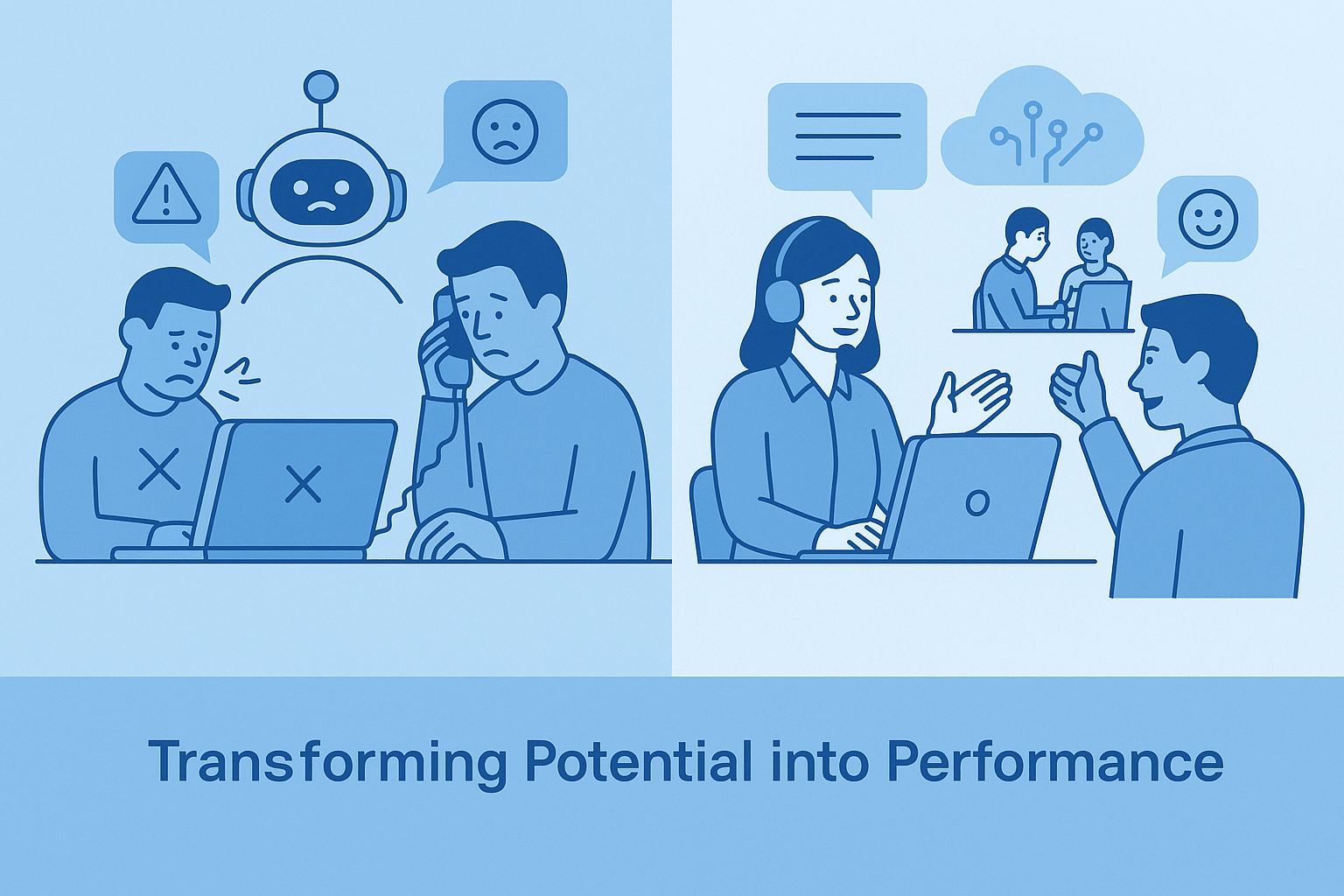
  • Customers stuck in bot loops
  • Agents cleaning up automation mistakes
  • Inaccurate personalisation
  • Handoffs that feel clunky or cold
  • Short-term speed, long-term dissatisfaction

Speed without context leads to confusion.

Speed without empathy leads to churn.

Where AI in Customer Support Actually Works

AI is incredibly powerful when used intentionally.

Here’s where AI in customer support adds genuine value:

  • Smart triage – Routing to the right team with less friction
  • Simple, high-volume query handling – “Where’s my order?” or “How do I reset my password?”
  • Agent support – Summarising threads, suggesting next steps or surfacing help articles
  • Pattern recognition – Spotting customer behaviour trends earlier

The best support teams are using AI to enhance human performance, not shortcut it.

The Smarter Approach: Strategy Before Speed

Before plugging in tools, take a step back and ask yourself:

  • Are we clear on why we’re automating this part of the journey?
  • Does it serve the customer or are we just bowing under internal pressure to “do more with less”?
  • Is our team onboard, trained and ready to partner with AI or are they working around it?

Because here’s the truth: Smarter customer support starts with leadership. Not tooling.

Want to Build a Support Experience That’s Smart, Not Just Fast?

We help growing businesses rethink how they integrate AI into their customer experience — so it works for your people, not against them.

Download our free guide on preventing support burnout

Explore our course on team development

Get in touch here to explore how we can help
Posted on Leave a comment

Smarter Customer Support: What’s Changing and Why It Matters

smarter customer support

Over the past few weeks, we’ve explored some of the most overlooked aspects of smarter customer support. Not as a cost centre or afterthought, but as a cultural, strategic and operational engine for growth.

The posts covered everything from burnout and team structure to tooling, tiering, and leadership. And there’s a pattern that’s hard to ignore:

The smartest companies are starting to treat support less like a department and more like a mindset.

They’re not just solving problems. They’re building trust, designing better experiences and creating long-term value.

So… what’s next?

The Shift Is Already Happening

Customer expectations are evolving fast and tech is evolving even faster.

Leaders are asking better questions:

  • How do we personalise support at scale without burning our people out?
  • What does good automation look like?
  • Where do we draw the line between human connection and smart self-service?

These aren’t just support questions. They’re business questions and they’re shaping what the next wave of high-performing teams will look like.

We’re Moving Into Smarter Customer Support

Over the coming weeks, I’ll be diving into a new content arc focused on:

  • The role of AI in customer experience
  • How to personalise at scale (and why it matters)
  • The balance between speed, strategy and human connection

If the last few posts were about rethinking support, this next phase is about reinventing how it fits into the bigger picture.

Want to Go Deeper on the Human Side of Support?

If the recent posts resonated with you, I’ve created a self-paced course called “How to Develop Your Team”. It’s built for businesses looking to level up how they lead, grow, and support their people.

It covers the kinds of topics we’ve been discussing: team burnout, culture signals, psychological safety and performance strategy.

You can also download my free guide on preventing support team burnout. It’s a great place to start if you’re seeing the pressure building on your frontline.

👉 Grab the free guide here

👉 Or explore the course to take things further.

Posted on Leave a comment

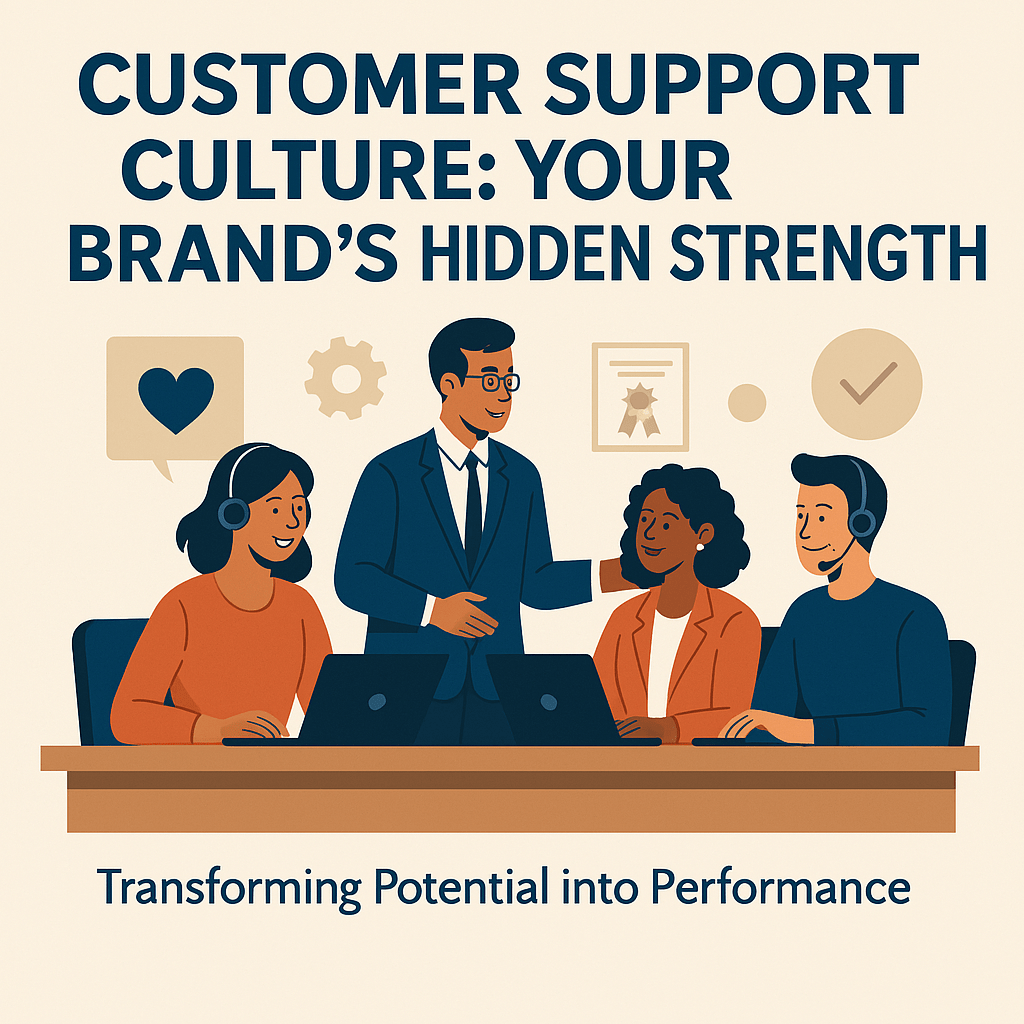
Customer Support Culture: Your Brand’s Hidden Strength

customer support culture

Customer support often gets treated as a function. Either as a department, a helpdesk or a queue to manage. But in reality, it’s much more than that. Support is a living reflection of your company’s values, your leadership style and your internal culture.

When done well, it becomes a strategic advantage. When neglected, it quietly erodes trust, morale and retention both internally and externally.

The way your support team communicates, escalates, resolves issues and collaborates with others says more about your culture than any internal values deck ever could.

Support Is a Cultural Mirror

You can’t fake culture in support. When customers are upset, confused or frustrated, your support team becomes your brand’s voice. The way they respond reflects how much trust, training and authority they’ve been given.

If they’re empowered, informed and respected — it shows.

If they’re under pressure, out of the loop or restricted by rigid processes — that shows too.

Support exposes how your business handles:

  • Pressure
  • Feedback
  • Responsibility
  • Empathy

In short, support doesn’t just represent your culture. It reveals it.

What a Healthy Customer Support Culture Looks Like

A strong customer support culture isn’t about scripts or speed. It’s about connection, collaboration, and consistency.

Here are a few signs you’re getting it right:

  • Cross-functional respect – Support is included in product and ops conversations, not just pulled in when there’s a problem.
  • Agent empowerment – Teams are trusted to make decisions, not just follow rules.
  • Aligned actions and values – The tone of your brand matches the experience your customers have.
  • Growth over blame – Mistakes are addressed, but they’re also treated as learning opportunities and not as reasons to point fingers.

When support teams feel heard, supported and connected to the bigger picture, they don’t just resolve issues, they reinforce your brand.

Support as Strategy, Not Silo

If you want support to reflect a strong culture, it has to be part of the business strategy, not isolated from it.

That means:

  • Sharing customer insights across departments
  • Including support leaders in roadmap planning
  • Using support metrics to shape training, onboarding and retention strategies
  • Recognising the emotional and strategic labour support teams perform every day

Support shouldn’t be reactive. It should be part of how you shape your customer experience and internal identity.

Make Culture Your Differentiator

In crowded markets, product features can be copied. But culture? That’s much harder to replicate. Your support culture is often the first and most lasting impression your customers will have of your brand.

So ask yourself:

  • Does your support culture reflect your company’s best qualities?
  • Or does it reveal cracks you’ve been trying to ignore?

Want to Build a Support Culture That Strengthens Your Brand?

We help both new and growing businesses align their support teams with their values. Building operations that scale trust, not just increase ticket volume.

You can also grab our free guide on how to prevent support team burnout. A key first step in creating a healthy customer support culture.

👉 Download the guide or get in touch here to explore how we can help.


Transforming Potential into Performance

Posted on Leave a comment

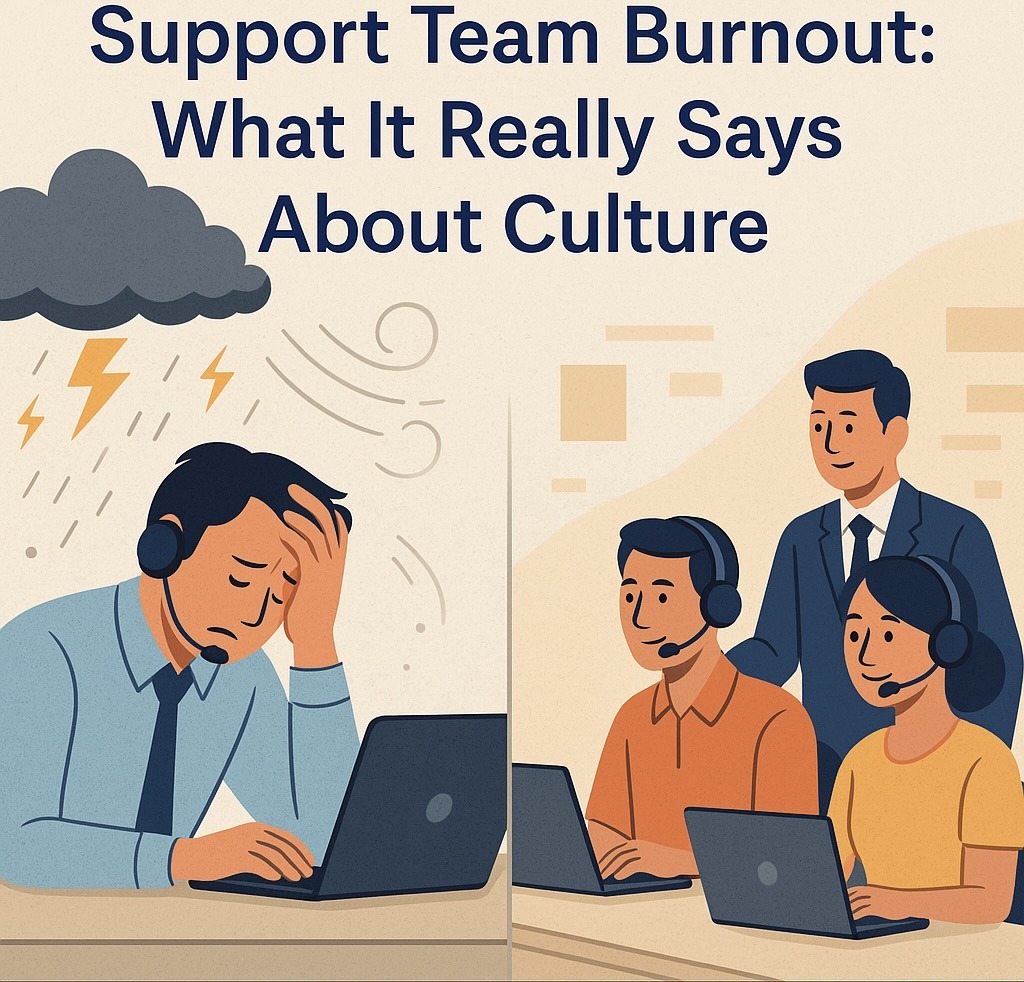
Support Team Burnout: What It Really Says About Culture

support team burnout

Support teams are often the first to show signs of burnout and it’s not just because they handle a high volume of tickets.

They’re the emotional frontline of your business. They absorb frustration, answer the same questions repeatedly, deal with pressure from both customers and leadership, and often do all of that without a clear seat at the table.

If your support team is running on fumes, it’s rarely just a workload problem. More often, it’s a sign of a deeper issue: your culture.

Why Support Team Burnout Happens First

Burnout isn’t just a symptom of too much work. In customer support, it’s also about how that work is structured, valued and supported.

Support agents regularly deal with emotional labour. Calming angry customers, navigating ambiguity and maintaining professionalism no matter what comes their way. In many businesses, they do all this with little recognition, unclear expectations and inconsistent feedback.

Metrics like “tickets closed” or “time to first response” are used as blunt instruments, ignoring the nuance of what it takes to actually resolve issues. And in teams where leadership hasn’t invested in clear strategy, effective tooling, or psychological safety, agents are left to carry the weight of the organisation’s gaps.

That’s not sustainable and your best people know it.

Burnout as a Cultural Signal

When support teams start to struggle, it’s often a reflection of the environment they’re operating in.

It might look like:

  • High churn rates in your support roles
  • Increased errors or inconsistent service quality
  • A sharp rise in escalations or negative feedback
  • Quiet disengagement from otherwise reliable team members

These aren’t just performance issues, they’re signals. Ignoring them often means the underlying problems spread to other parts of the business.

If your stated values are things like “customer-centric” or “people-first,” but your support team is overworked, under-supported, and undervalued. That disconnect will show up everywhere, from your Glassdoor reviews to your customer retention.

Building a Healthier, Human-Centred Support Culture

The fix isn’t ping-pong tables or mental health webinars. It starts with leadership.

Here’s what helps:

  • A clear support structure with appropriate tiering and workflows
  • Leadership modelling empathy, boundaries and realistic expectations
  • Training and development opportunities that show agents they’re valued
  • Feedback loops that give the support team a voice in decisions
  • Recognition that goes beyond “good stats” and into meaningful impact

When agents feel heard, supported, and empowered, the whole experience improves for them and for your customers.

Start Small — But Start Intentionally

You don’t need a total culture overhaul to begin fixing burnout in your support function. But you do need to take the early signals seriously.

If you’re noticing signs of fatigue, frustration or disengagement in your frontline team, don’t treat it as a performance problem. Treat it as an opportunity to rethink how your business supports the people closest to your customers.

Want to Make Support Culture a Strength and Not a Strain?

We help businesses like yours design support environments that scale with sustainability through smart structure, clear leadership and cultures that care.

You can also start by downloading our free guide on managing support team burnout. It’s packed with practical strategies to protect your team without sacrificing performance.

👉 Download the guide or reach out to us here to start the conversation.

Transforming Potential into Performance

Posted on Leave a comment

AI in Customer Support: Fixing the Burnout Backlash

AI in customer support

AI in customer support is booming. Chatbots, auto-routing, AI assistants are everywhere you look. Companies are automating.

The promise? Faster resolution times, reduced costs and round-the-clock availability.

The reality? Poorly implemented AI is causing frustration, damaging customer relationships and burning out support teams.

We’re in the middle of an AI burnout backlash and most start-ups don’t even realise it’s happening.

When AI Becomes a Burden, Not a Boost

Start-ups often adopt AI tools reactively. A bot is added to reduce ticket volume. An auto-responder is plugged in to handle FAQs and another tool promises faster tagging and triage. Individually, these all seem helpful. But together if there is no clear strategy to link them, things quickly become cluttered, confusing and counterproductive. You end up with:

• Customers stuck in loops, begging to speak to a human

• Agents working around the tools, not with them

• Leadership wondering why support still feels slow and messy

The Hidden Costs of AI Burnout

If AI is done wrong, it creates more work than it saves. This leads to:

1. Customer Experience Taking a Hit

When bots can’t understand intent or escalate properly, frustration rises fast. When customers hit a wall, they don’t just leave, they often broadcast their experience.

2. Your Team Ends Up Managing Bots

Instead of focusing on real customer needs, support teams spend time overriding flawed automation, cleaning up errors and explaining “what the bot meant.”

3. Insights Get Lost

Disconnected tools don’t just impact workflow, they dilute the data. If your AI isn’t integrated properly, your team can’t see the full picture.

Where AI in Customer Support Actually Works

You see AI itself isn’t the problem. Poorly applied AI is!

Here’s where it adds real value:

Triage & tagging – Automate first steps, not final decisions

Simple query resolution – Great for things like order status or password resets

Knowledge base integration – AI surfacing relevant content in real time

Smart escalation – Moving complex issues to human agents with context intact

The key is balance. AI should enhance the team, not replace it.

Scaling Without Losing the Human Touch

If you’re scaling your support function and are considering implementing some AI tools to help, ask yourself:

• What problem are you looking to solve with this tool?

• Does your team have a say in the rollout and feedback loop?

• Does this tool connect cleanly to your existing systems?

Build with your team, not on top of them. Always design around your customer journey and not the latest tech hype.

Start With Strategy, Not Just Tools

AI in customer support is only as good as the strategy behind it. When you start with process, team readiness and customer need, you’ll choose smarter tools and build a system that actually scales.

What happens when you skip those steps? You’re not scaling, you’re just layering complexity.

→ Want to scale support the smart way with AI that actually works?

Get in touch as we help growing companies design customer support systems that combine automation with empathy and strategy with scale.

👉 Reach out to us here

Posted on Leave a comment

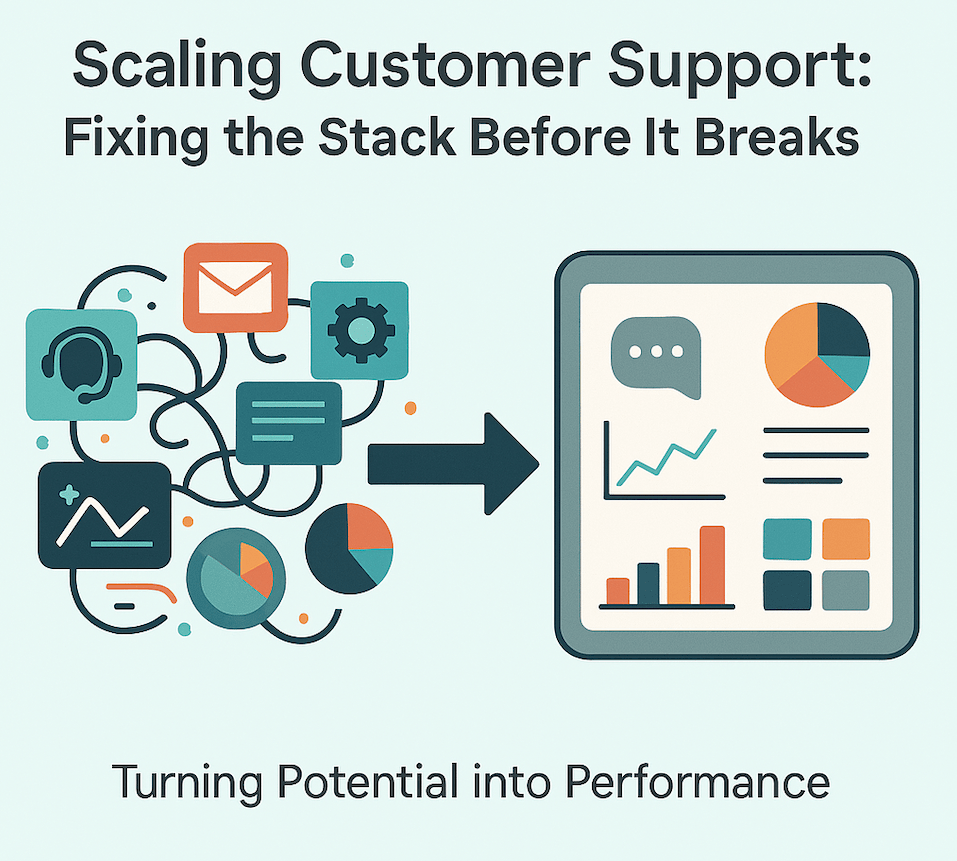
Scaling Customer Support: Fixing the Stack Before It Breaks

scaling customer support

Turning Potential into Performance

Early-stage start-ups are scrappy by design. You grab the first CRM that fits, add a chat tool when tickets pile up, and onboard agents when inboxes start to overflow.

But before you know it, you’ve stitched together a support stack held up by duct tape and goodwill.

And that’s fine, until it isn’t…

As your business scales, so must your customer support strategy. Because what works when you’re handling dozens of queries can quickly collapse under hundreds. And when the tools don’t talk, the tiers blur, and the team’s stretched too thin… It’s not just your support that suffers, it’s your customer experience, retention, and reputation.

What Does a Scalable Customer Support Stack Look Like?

A truly scalable customer support strategy has three core building blocks:

1. Tools That Talk to Each Other

The average support team uses a CRM, a helpdesk, a knowledge base, some form of automation or AI, and at least one internal dashboard. That’s a lot of moving parts.

But if these tools are siloed—if agents are switching tabs and copying data just to resolve a ticket—it slows everything down. Worse, it creates inconsistent service and lost insights.

The solution? A stack built on integration. Choose tools that work together, not just tools that check a box.

2. Tiering Designed for Growth, Not Just Speed

In the early days, it’s tempting to treat every ticket equally. But as volume grows, so should your tiering strategy.

A scalable model routes common, low-risk issues to self-serve channels or AI support, while more complex or high-value cases escalate to trained specialists.

This isn’t about automation replacing humans, it’s about using the right resource at the right time to preserve quality and efficiency.

3. Teams That Evolve With the Business

Many teams start with generalists: one person does everything from onboarding to refunds to tech support.

But that breaks as complexity grows. Scaling customer support means introducing defined roles, clear responsibilities, and professional development—especially for leads, QA, and training functions.

Support should grow as a discipline, not just in headcount.

What Breaks When You Don’t Scale Support Intentionally?

• Duplicate tools and disjointed data

• Overworked agents doing QA on the side

• Slower resolution times

• Customers falling through the cracks

• Leadership flying blind on customer trends

And perhaps most dangerously: support becomes reactive and tactical, not strategic.

What You Can Audit This Month

If your customer support strategy hasn’t had a health check lately, here are four quick wins to look at:

• Are your tools integrated, or are you copy-pasting between platforms?

• Is your tiering clearly defined? Does everyone understand it?

• Are you tracking performance beyond response time?

• Where are the manual workarounds that could be automated or simplified?

Support That Grows With You

Scaling customer support isn’t about throwing more people at the problem. It’s about designing a stack—of tools, tiers, and teams—that can flex, adapt, and perform as you grow.

We work with scaling tech companies to make that happen—bringing clarity to the chaos and turning support from an afterthought into a true business driver.

→ Want help reviewing or rebuilding your support stack?

Whether you’re just getting traction or already scaling, we can help design a support setup that works today and grows with you tomorrow.

👉 Reach out to us here

Posted on Leave a comment

Redesigning Customer Support Strategy: From Cost Centre to Growth Engine

customer support strategy

For many start-ups, the customer support strategy is one of the last areas to get serious investment.

It’s seen as a cost to manage, a box to tick — a necessary function that keeps the lights on but doesn’t really move the needle.

But that mindset is costing more than just money.

The Old View: Support as a Necessary Cost

Traditionally, support is set up to handle problems.

Tickets come in, agents respond, and the goal is simple: close it quickly and cheaply.

The result? Teams are structured for speed, not insight. Tools are selected for cost, not cohesion. And metrics measure volume, not value.

This setup might keep the wheels turning.

But it won’t help you scale sustainably — and it certainly won’t fuel growth.

The Shift: Start-Ups Are Rethinking Customer Support Strategy

Smart founders are beginning to view customer support strategy differently.

Not as a back-office cost centre… but as a frontline growth engine.

Here’s why:

• Customers don’t just want fast answers — they want reassurance and consistency.

• Support conversations reveal what your product gets right — and where it’s falling short.

• Great support turns users into loyal advocates (and even beta testers).

• Poor support? It turns paying customers into public critics.

Put simply: support touches every part of your customer experience.

If you’re not investing in that, you’re leaking value at every stage of your growth.

What a Strategic Support Function Looks Like

So what does it mean to run support like a growth function?

Here are five core levers to focus on in your customer support strategy:

1. Tiering That Works

Not every query needs a human — but not every customer wants a bot. Smart tiering lets you scale without compromising experience.

2. The Right Channels for Your Customer Base

Email might be cheap. But live chat, in-app support, or even asynchronous messaging might offer better retention and resolution. It’s about fit, not friction.

3. A Well-Integrated Tool Stack

CRMs, knowledge bases, AI assistants, reporting tools — these should work together, not in silos. If your team is switching tabs constantly, something’s off.

4. A Team Structure That Reflects Your Goals

As your business grows, your support team needs to evolve — from generalists to specialists, from ticket-resolvers to product partners.

5. Performance Metrics That Reflect Quality, Not Just Quantity

Time to first response matters. But so does resolution quality, customer satisfaction, and even product feedback capture.

Support Isn’t Just Operational — It’s Cultural

Here’s the thing most people miss:

Your customer support reflects your culture.

If your team is empowered, resourced, and respected — your customers feel that.

If your team is under pressure, underpaid, and unheard — they feel that too.

Support isn’t just a channel.

It’s a signal.

Start Here: What You Can Do This Quarter

If this resonates, you don’t need a full-scale transformation tomorrow.

But here’s where you can start:

• Review your tiering and channel setup — are they still fit for your current stage?

• Talk to your support team — what are they seeing that leadership isn’t?

• Check your metrics — are you measuring speed, satisfaction, or real success?

And if you’re unsure how to move forward, that’s where we come in.

→ Ready to turn your customer support into a strategic advantage?

Whether you’re scaling fast or just getting started, we help tech companies build customer support operations that grow with their business — not against it.

Transforming Potential into Performance

👉 Reach out to us here

Posted on Leave a comment

Crafting New Horizons: Exciting Updates and Offerings

Strategic Thinking

Introduction: Embracing Change and Growth

The first few weeks since the launch of CBDS have been a whirlwind of activity and innovation. Today, I’m thrilled to share a couple of exciting updates and offerings that underscore our commitment to growth and excellence. Our newly unveiled website and expanded consulting services signal a robust new chapter for our venture.

Our new website is live and serving as an essential digital gateway. The transition from a creative vision to a functional hub has been a fascinating journey, particularly the deep dive into the often mystifying field of SEO. While our mastery isn’t quite at Snape level yet, we’ve begun attracting genuine visitors, not just scraper bots! This achievement marks the first step in transforming our platform into a thriving virtual community for our products, services, and blog content.

A Hub of Possibilities: More Than Just a Website

At CBDS, we believe our website is a cornerstone of our business – a comprehensive hub rather than a mere digital brochure. It houses everything from informative articles and company updates to contact details, all crafted to better serve our community. Launching a website is not just about aesthetics but also about functionality and user experience. We have committed to ensuring our digital presence reflects our brand ethos and speaks directly to the needs of our clients.

One of the strategic benefits this website ushers in is the newfound ease in accessing our range of consulting services. As a medium of connection, it’s designed to be interactive and informative, seamlessly guiding visitors through our offerings and inspiring them to reach out for opportunities of collaboration.

Consulting Services Launch: Tailored Expertise for Dynamic Needs

As part of our lineup of updates, I am excited to highlight the launch of our consulting services. We focus on four specialized areas that cater to diverse business challenges with targeted solutions. First among these is Bespoke Training Program Development. By crafting custom-built training solutions, we aim to align with unique team dynamics, ensuring the strategies are both impactful and sustainable.

Next, our Customer Support Team Setup & Optimisation service offers tailored expertise to refine support frameworks, enhancing efficiency and customer satisfaction. We recognize that a robust customer support system is critical in maintaining a loyal customer base and driving business success.

Furthermore, our Outsourcing Support service provides comprehensive guidance on creating effective outsourcing strategies—from planning to managing partnerships. This service is designed to help businesses expand capabilities while optimizing costs and resources.

Finally, our Project-Based Business Consultancy is ready to tackle leadership and operational efficiency challenges with strategic support. Our team’s collective experience fuels our ability to pinpoint and address core issues, leading to substantial business improvements.

Your Role in Our Journey: An Invitation to Innovate

We’re not just offering services; we’re inviting you to partner with us in a journey toward mutual success. Whether it’s through bespoke training or operational optimisation via outsourcing, our commitment is to deliver service excellence and measurable results. Together, we can craft strategies that elevate your business.

We invite you to be part of this conversation. What challenges do you face in these fields? Share your experiences in the comments below or tag a colleague who could benefit from our solutions. Let’s engage, innovate, and elevate your business success story together.

Thank you for being an integral part of the CBDS journey thus far. Let’s continue to innovate, adapt, and level up—together!

Posted on Leave a comment

Closing the Skills Gap: Why Your Workforce Matters

Strategic Thinking

Why Investing in Your People is Key to Business Success

The skills crisis is real. LinkedIn’s latest Workplace Learning Report highlights a critical truth: organisations are facing a skills gap, with 57% of UK L&D professionals concerned their staff lack the talent to execute strategic goals. Closing the skills gap that exists today is more important than its ever been.

The Solution: Career Development

This report reveals that organisations prioritising career development significantly outperform those who don’t. They’re more confident in their profitability, better at attracting and retaining talent, and even more likely to be at the forefront of generative AI adoption.

Why Career Development is so Powerful

It goes beyond just training. It’s about creating a culture of growth and opportunity. Employees who feel valued and supported in their career journey are more likely to be engaged, loyal, and innovative.

Key takeaways:

  • Career development champions: These organisations have robust career development programs and achieve better business outcomes.
  • Generative AI and career development: The report shows a strong correlation between mature career development initiatives and successful GAI adoption.
  • Employee engagement: Companies with strong career development programs see higher employee engagement with learning, leading to a flow of business-relevant skills.
  • Promotions and leadership: These companies also see higher rates of promotions, especially into management and leadership positions.

Closing the Skills Gap: Conclusion

Invest in your people. By creating a culture that supports their career growth, you’ll not only build a more engaged and loyal workforce, but also unlock your company’s full potential for success.

Want to learn more? Check out the full report from LinkedIn for a deeper dive into the data and actionable insights.

Let’s start a conversation! Share your thoughts on the importance of career development and how you’re investing in your team’s growth.

Posted on Leave a comment

Are We Ignoring Burnout? Strategies for Leaders

course + coaching bundle

Understanding the Burnout Epidemic

Burnout has become more than just a buzzword. It is a crisis that silently undermines the productivity, morale, and well-being of our teams. As leaders, are we ignoring burnout? We have a responsibility to take care of our team members. Our duty is not just to achieve targets. We must also nurture the mental health of our team members. We often find ourselves buried under the weight of our responsibilities. As a result, we inadvertently overlook the signs of burnout. These signs manifest in various forms. Fatigue is one indicator. Lack of motivation is another. A dip in performance also signals that we must be vigilant about these issues.

Recognising burnout is not merely about identifying symptoms; it involves understanding the root causes that lead to this state. The modern workplace is riddled with high expectations. It is also burdened by increased workloads and relentless deadlines. These challenges are compounded by the pressures of balancing work and personal life. Creating a supportive environment for mental health can seem daunting. However, we must accept this challenge as leaders.

Strategies That Make a Difference

To effectively tackle burnout, we need actionable strategies. These strategies must not only serve to pinpoint the issue but also engage those affected in crafting solutions. I’ve spent considerable time reflecting on this challenge. This reflection led me to talk with professionals in all walks of life. I listened to their experiences. They spoke about living with and dealing with poor mental health. They also shared how they support those around them while working to combat burnout. Implementing strategies to combat these problems, which are often seen as taboo, involves more than just ticking boxes. It requires heartfelt conversations and a commitment to continuous improvement.

Claim Your Free Guide to Combat Burnout

I’ve created a handy guide and checklist to aid leaders like you in navigating the complex landscape of burnout. They are available for free for a limited time! This guide offers structured strategies to identify and manage burnout effectively. It also initiates essential dialogues that can lead to real change within your organisation. Equip yourself with the tools you need to confront burnout head-on and support your team’s mental health.


Now, it’s your turn to take action! I invite you to claim your copy of our free guide and checklist today by signing up to our email list below. Share your experiences in recognising and addressing burnout, whether for yourself or your teams, in the comments below. By breaking the taboo surrounding this critical issue, we can collectively foster healthier work environments. These strategies and others are covered in depth in our ‘How to Develop Your Team‘ course. It is available now at a limited time launch price.

Let’s not wait any longer; it’s time to act!