Posted on 1 Comment

Future Ready Leadership: Lessons from 2025 and Beyond

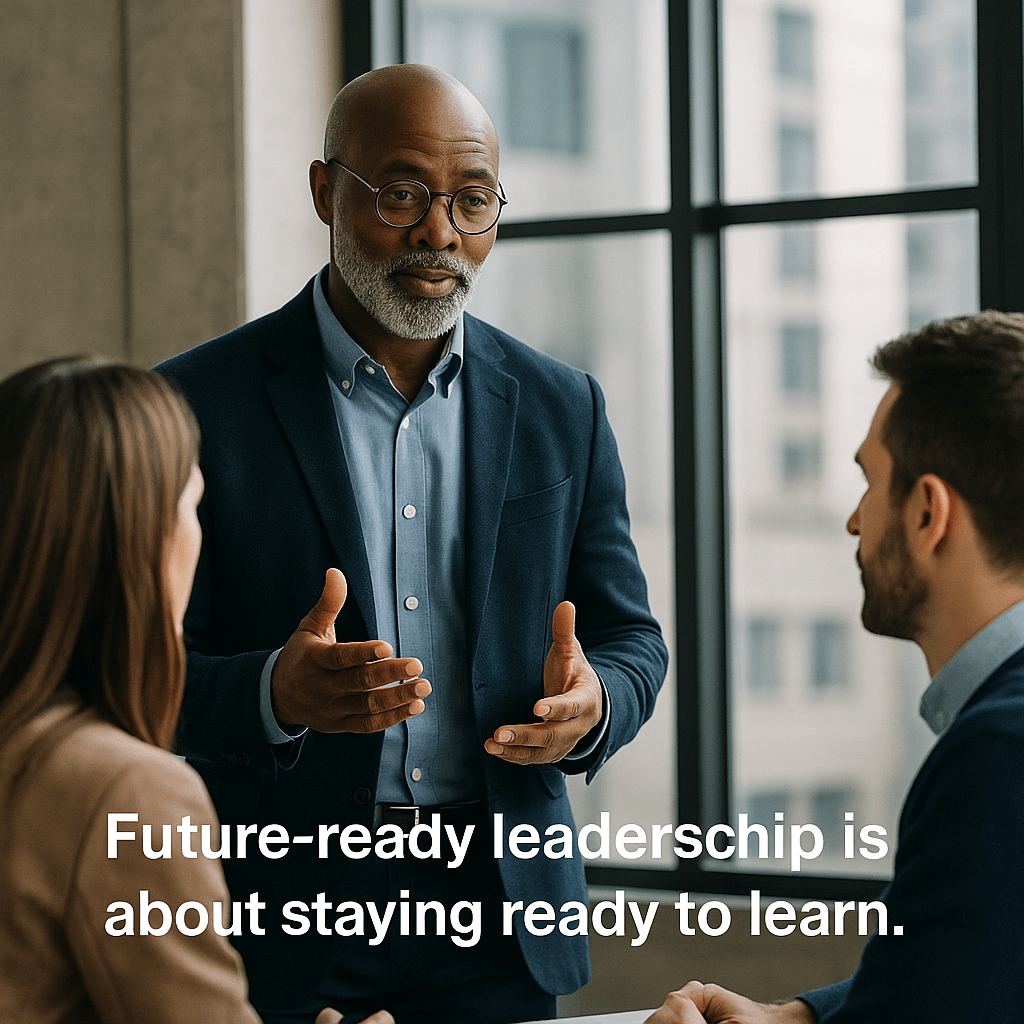
An experienced business leader speaks with two colleagues in a modern office with large windows overlooking a city skyline, symbolising forward-thinking leadership and continuous learning for the future.

The past year has tested every kind of leader. Unpredictable markets, evolving technology and new expectations around work have forced us all to adapt faster than ever.

Some leaders tried to go back to how things were. Others learned, adjusted and found new ways to move forward. Those are the ones shaping what leadership will look like in 2026 and beyond.

Future-ready leadership isn’t about having all the answers. It’s about staying ready to learn.

Adaptability beats certainty

In times of change, it’s tempting to search for solid ground. The perfect plan, the right process, the final answer. But if 2025 taught us anything, it’s that adaptability always wins over certainty.

According to *Deloitte’s Global Human Capital Trends report, 90% of executives believe building adaptable workforces is a top priority for long-term success. The challenge isn’t knowing change will come, it’s preparing people to navigate it confidently.

Future-ready leaders build flexibility into how they think, plan and lead. They don’t resist change. They anticipate it.

Trust drives performance

As technology takes on more tasks, the value of human connection has only grown stronger. The best leaders are those who create trust within teams, across functions and between people and technology.

*Gallup’s research continues to show that teams with high trust levels outperform low-trust teams by over 40% in engagement and productivity.

Trust isn’t just built through policies or performance reviews. It’s built through small, consistent actions. Following through on what you say, sharing context and giving credit where it’s due.

Clarity creates calm

Uncertainty fuels anxiety and anxious teams rarely perform at their best. Leaders who communicate clearly (even when answers are incomplete) give their teams something to hold onto.

Future-ready leadership is about translating complexity into direction. It’s about helping people see where they’re heading, even when the path isn’t fully mapped out.

Clarity creates calm. Calm enables progress.

Leading into what’s next

As 2025 comes to a close, it’s clear that the pace of change isn’t slowing down. The leaders who will thrive in the year ahead aren’t necessarily the most experienced or technical. They’re the ones who stay curious, trust their people, and communicate with purpose.

Leadership has never been about perfection. It’s about progress. One conversation, one decision and one learning moment at a time.

Want to go deeper?

If you’re looking to strengthen your leadership for the year ahead, explore my coaching and course options at CBDS. They’re designed to help you stay adaptable, focused and ready for whatever’s next.

*Sources

Posted on Leave a comment

Building Adaptable Teams in a Changing World

A diverse team of professionals collaborate in a bright modern office, gathered around a laptop in discussion, symbolising teamwork, adaptability, and learning in action.

Change isn’t slowing down. New tools, shifting markets and evolving customer expectations mean that what worked last year might not work next quarter.

The teams that thrive aren’t just the most skilled, they’re the most adaptable. They learn fast, adjust easily and stay focused even when things feel uncertain.

Adaptability isn’t luck. It’s something leaders can build.

Create safety before speed

When change hits, some teams freeze while others adapt. The difference often comes down to psychological safety. Whether people feel comfortable speaking up, asking questions and trying new things without fear of failure.

Research by Google’s *Project Aristotle found that psychological safety was the single biggest factor behind high-performing teams. Without it, even the most talented people hold back.

Adaptable teams move fast because they trust that learning is valued more than getting it right every time.

Build feedback into the flow

Teams that grow quickly don’t wait for annual reviews to learn what’s working. They share feedback often. Short, useful and focused on improvement.

This rhythm helps teams adjust before small issues become big ones. It also keeps learning continuous instead of episodic.

Try simple habits like quick end-of-week reflections, “what went well / what to tweak” check-ins or team retros after key milestones. The goal isn’t to criticise. It’s to keep improving together.

Reward learning, not perfection

If success is always defined as “getting it right,” your team will naturally play it safe. But when you recognise learning, experimentation and progress, you build resilience.

Adaptable teams aren’t afraid to try new tools, suggest ideas or test better ways of working. They know that effort and insight are valued just as much as outcomes.

As one of my favourite quotes puts it, “The measure of intelligence is the ability to change.” — Albert Einstein.

The leadership challenge

In a world that keeps shifting, the best thing you can give your team isn’t certainty, it’s confidence.

Confidence that they can adapt, learn and thrive no matter what comes next.

When you build adaptability into your culture, you’re not just preparing for change. You’re shaping a team that grows stronger because of it.

Want to go deeper?

If you’re ready to help your team stay motivated, engaged and adaptable, take a look at my course How to Develop Your Team. It’s built to help you unlock long-term performance through trust, feedback and growth.

*Sources