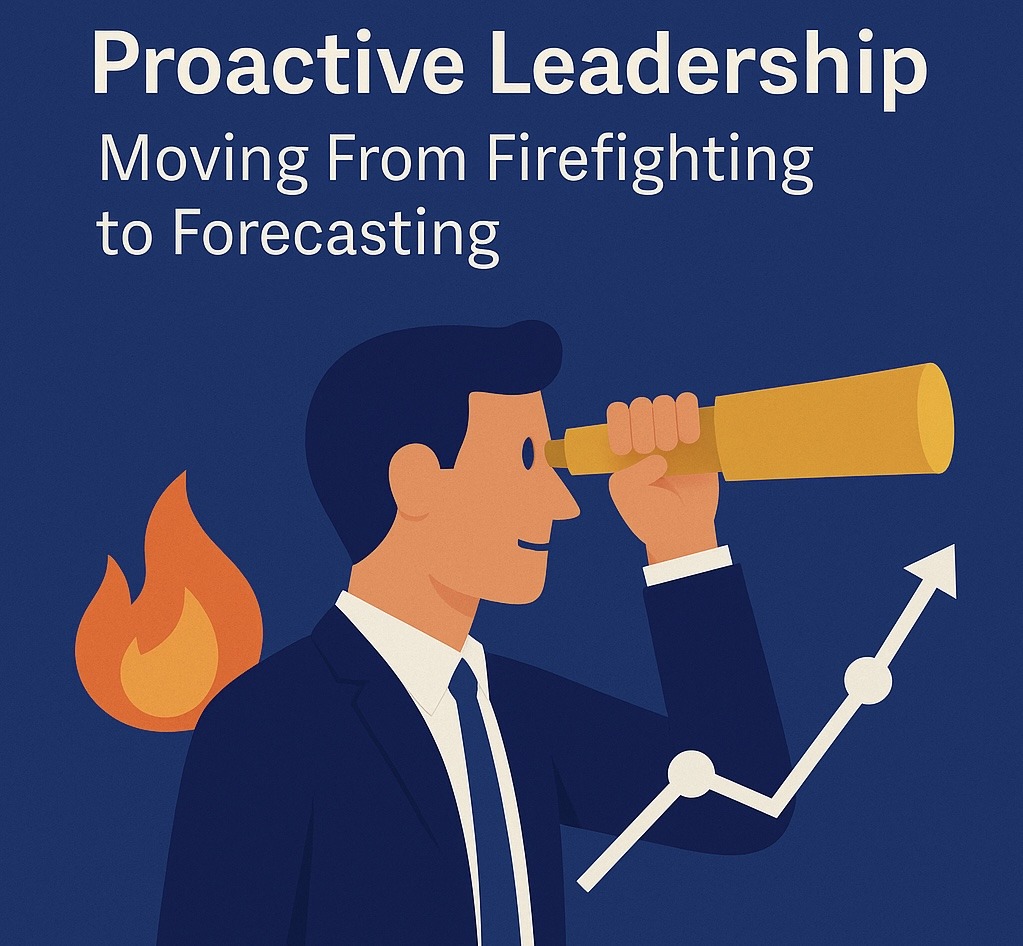
Too many leaders spend their days reacting putting out fires, chasing updates, and solving problems that feel urgent but rarely move the needle. If that sounds familiar, you’re not alone. But here’s the thing: great leadership isn’t about handling chaos well. It’s about building a team and structure that stops the chaos from happening in the first place. This is the heart of proactive leadership and it’s the difference between surviving and scaling.
What Reactive Leadership Looks Like
We’ve all worked in environments where it feels like everything is urgent. Projects stall. Priorities shift daily. Meetings turn into crisis management sessions. If you’re:
- Constantly pulled into last-minute issues
- Struggling to find time for forward planning
- Noticing your team is burning out or unclear on priorities
…you’re probably stuck in a reactive leadership loop. This doesn’t mean you’re doing a bad job, it just means the system you’re working in isn’t designed to give you breathing space. And without space, strategic thinking has no room to thrive.
The Case for Proactive Leadership
Proactive leadership is about shaping the future rather than reacting to the present. It means leading with intention, designing better systems and giving your team clarity on where they’re headed and why. It looks like:
- Setting clear priorities (and sticking to them)
- Creating processes that solve problems before they escalate
- Coaching your team to take ownership and solve challenges at the right level
- Building time for reflection, learning and big-picture thinking
When you make the shift from reactive to proactive, you unlock better decisions, better morale and more sustainable growth.
Why It’s Hard to Break the Cycle
The honest truth? Firefighting feels productive. It keeps us busy, involved and (sometimes) important. But it rarely builds anything lasting.
What makes it even harder is that many leaders are promoted for being great problem-solvers, not great forecasters. It takes a conscious effort to rewire how you spend your time and what you reward in others.
If you’ve ever received feedback that you need to be “more strategic,” you’re not alone. I’ve been there. I used to spend 80% of my time on tactics and only 20% on strategy. I was constantly being told I needed to flip it, but no one showed me how. So I figured it out.
A Better Way Forward
Here are 3 steps to start shifting from firefighting to forecasting:
- Audit your time. For one week, track where your energy goes. How much time is spent on solving vs shaping? You might be surprised.
- Block strategic time and protect it. Treat thinking time like any other meeting. Make space for it, or it won’t happen.
- Coach your team to escalate smarter. Not every problem needs your input. Build a culture of ownership and decision-making so your team can move forward without waiting on you.
Ready to Step Into Proactive Leadership?
If you’re stuck in the cycle of constant reaction and want to lead with more clarity and impact, that’s exactly what we help with.
From shaping strategy to building scalable structures, our consultancy is here to help you lead smarter, not just harder.
About the Author
Andy Jillings is the founder of Cambridge Business Development Services. With over two decades of leadership experience across organisations including Spotify and fast-growing technology companies, Andy works with founders and leadership teams to strengthen strategy, develop teams and build organisations that scale effectively.
His work focuses on strategic thinking, leadership development, customer experience and the evolving balance between human capability and AI.
Turn Insight Into Action
If this article has highlighted challenges or opportunities you are currently thinking through in your own business, there are a few ways we can take the next step.
• Book a free Scale-Up Strategy Check-In
A short conversation to explore your current challenges and opportunities.
• Explore the Strategic Thinking course
A practical framework for leaders who want to move from reactive decision-making to strategic clarity.
• Learn more about coaching and advisory support
Cambridge Business Development Services – Transforming Potential into Performance